
PSV - Jean Morel
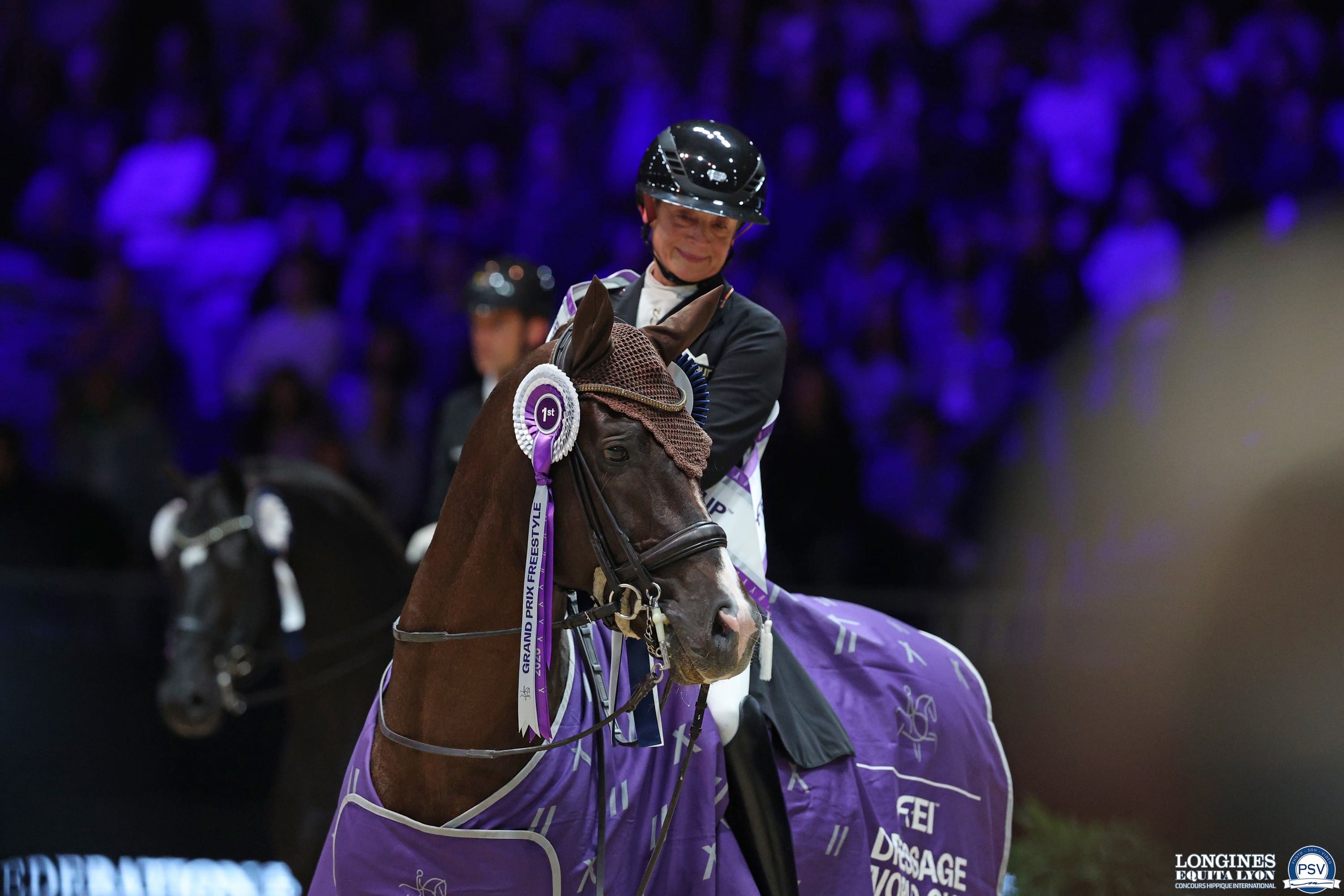
Viva Gold OLD, a serious contender for the Gothenburg Final !
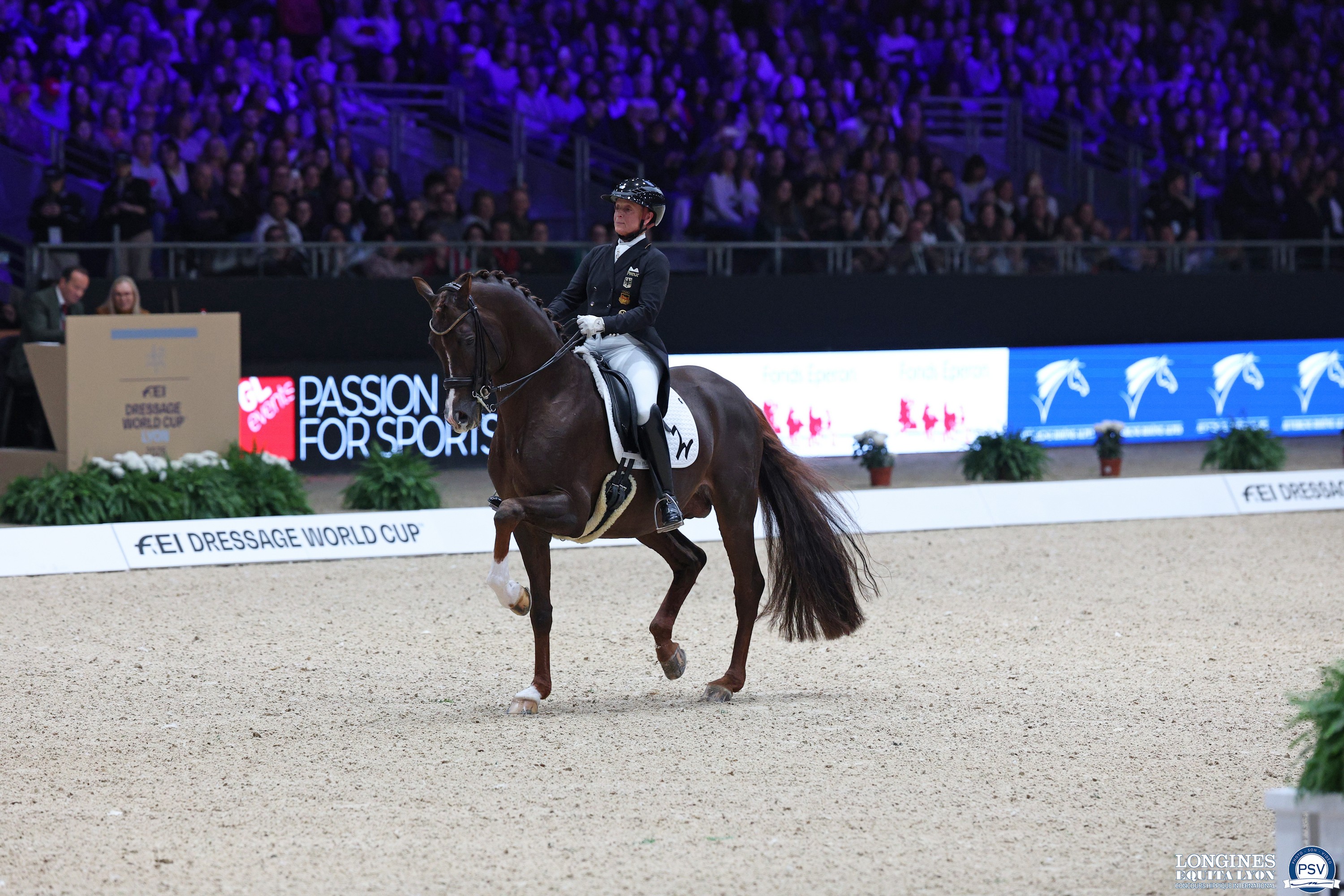
Eleven victories in fourteen international starts, three second-place finishes, and a staggering, relentless rise: in his very first season at Grand Prix level, Viva Gold OLD is already boasting an extraordinary record. On November 14, in Stuttgart, the ten-year-old stallion pushed his boundaries once again. Under the saddle of Isabell Werth, he won the Grand Prix with 77.826% before claiming the Grand Prix Freestyle on 88.560%, setting new personal bests in both tests. Two weeks earlier, the pair had already triumphed in the FEI Dressage World Cup™ at Longines Equita Lyon. Scoring 87.890% in the Freestyle, Viva Gold finished ahead of reigning European champions Justin Verboomen and Zonik Plus of Belgium (85.810%), as well as Larissa Pauluis and Flambeau (80.530%). A maiden victory on the prestigious winter circuit—swiftly backed up in Germany—that firmly establishes the stallion among the leading contenders for the Final in Gothenburg next March.
Exceptional bloodlines, bridging Vivaldi and Weihegold
Born on April 8, 2016, Viva Gold OLD carries some of the most sought-after bloodlines in contemporary dressage. His sire, Vivaldi, is a son of Krack C out of Renate-Utopia, by Jazz. The KWPN stallion has made his mark as a sire renowned for passing on expressive movement, suppleness, and a natural aptitude for collection to his offspring. On the dam side, Viva Gold OLD’s genetics are equally remarkable. His dam, Weihronce, is a daughter of For Romance I—himself by Fürst Romancier out of the celebrated Gesina, by Sir Donnerhall I. Yet the true jewel of this pedigree lies one generation further back: Weihronce is a direct daughter of Weihegold OLD, by Don Schufro, whose dam, Weihevoll, is by Sandro Hit.
Viva Gold’s pedigree thus unites Vivaldi with three sires that have left an indelible mark on European dressage: For Romance I, Don Schufro, and Sandro Hit. It brings together a sire line prized for its locomotion and a maternal line whose athletic brilliance has been proven at the very highest level. Born in 2005, Weihegold OLD won three World Cup Finals with Isabell Werth in 2017, 2018, and 2019. A team gold and individual silver medalist at the 2016 Rio Olympic Games, she stands among the most decorated mares in dressage history, exerting a considerable influence on modern breeding.
140,000 euros at two months old: Viva Gold, a standout from the start
On June 4, 2016, before Viva Gold was even two months old, his destiny took its first dramatic turn. Presented at the Vechta auctions hosted by the Oldenburg studbook, the chestnut colt sparked a fierce bidding war. A Dutch investor secured him for €140,000; by comparison, the thirty-one foals sold at the auction averaged around €17,800. At an age when a sporting future inevitably remains uncertain, Viva Gold’s pedigree, conformation, and gaits were enough to convince investors to pay an extraordinary sum. In a striking coincidence, that very same day, Weihegold and Isabell Werth won the German Grand Prix Special Championship in Balve.
A noted breeding stallion before becoming a top competitor
Ridden by Kathrin Sudhölter, Viva Gold made sporadic appearances in German national classes between 2019 and 2022. He returned to competition in May 2024 at S-level following a lengthy absence from the public eye. In the meantime, his career as a breeding stallion had taken center stage.
Viva Gold’s first crop of foals, born in 2020, quickly enjoyed success at stallion inspections and licensing approvals. By February 2025, Eurodressage had already recorded twelve licensed sons from that initial crop. His progeny are prized for their type, movement, and high-performance potential.
February 2025: Isabell Werth takes over her champion mare’s grandson
On February 8, 2025, Isabell Werth announced Viva Gold’s arrival at her stables in Rheinberg, reuniting with a direct descendant of one of the defining mares of her career. At nine years old, however, Viva Gold was far from following the conventional sporting path of a future championship horse. His outings had been few, his Grand Prix experience remained to be built, and his stud duties had taken precedence over competition. The challenge was therefore to transform a genetically remarkable horse, blessed with proven talent, into a top-flight partner.
Under Werth’s guidance, his progress accelerated almost immediately. In June 2025, in Hamburg, the pair secured qualification for the Louisdor Prize Final later that year. Reserved for eight- to ten-year-old horses aimed at Grand Prix, this series serves as one of the primary pathways to top-level sport for Germany’s rising dressage stars. On December 21, 2025, inside Frankfurt’s Festhalle, Isabell Werth and Viva Gold won the Louisdor Prize Final with a score of 75.620%.
The Louisdor Prize Final: a first major turning point
Their margin of victory was decisive, confirming the young stallion’s aptitude for the demands of Grand Prix. Piaffe, passage, and pirouettes were already standout highlights of his test, while the quality of his movement, energy, and willingness won over onlookers. Isabell Werth—already a Louisdor Prize winner in 2010 with El Santo and in 2015 with Emilio—claimed her third title in the series and made no secret of her high regard for Viva Gold, calling him one of the most talented horses she has ever ridden in the competition. The pair also received the 2025 Otto-Lörke Prize, awarded to promising Grand Prix horses. At nine, Viva Gold appeared ready in every respect to take on the international circuit.
2026: A string of victories and personal records
The 2026 season quickly exceeded expectations. On March 6, at the CDI 3* in Herning, Viva Gold contested his very first international Grand Prix—and won straight out of the gate with 77.500%! Two days later, he captured the Grand Prix Special on an average of 79.042%, setting a new benchmark. In Mannheim in early May, the pair achieved another double, winning the Grand Prix with 77.087% and the Special with 76.319%.
In Hamburg a few days later, Viva Gold stepped up to 5* level. He finished second in the Grand Prix on 75.783% before triumphing in the Freestyle with 84.365%. On June 7, in Balve, he was crowned German Grand Prix Freestyle Champion with 83.650%, handing Isabell Werth her twentieth national title in the discipline. In July, in Hagen, the pair placed second in the Grand Prix on 76.239% before winning the Special with 78.894%.
Autumn only reinforced that momentum. On September 25 and 26, at the CDI 4* in Vienna, Viva Gold claimed back-to-back wins in the Grand Prix (77.370%) and the Freestyle (86.565%). The upward climb of his Freestyle scores was particularly striking—a string of results pointing to far more than isolated success.
Longines Equita Lyon: the first major triumph
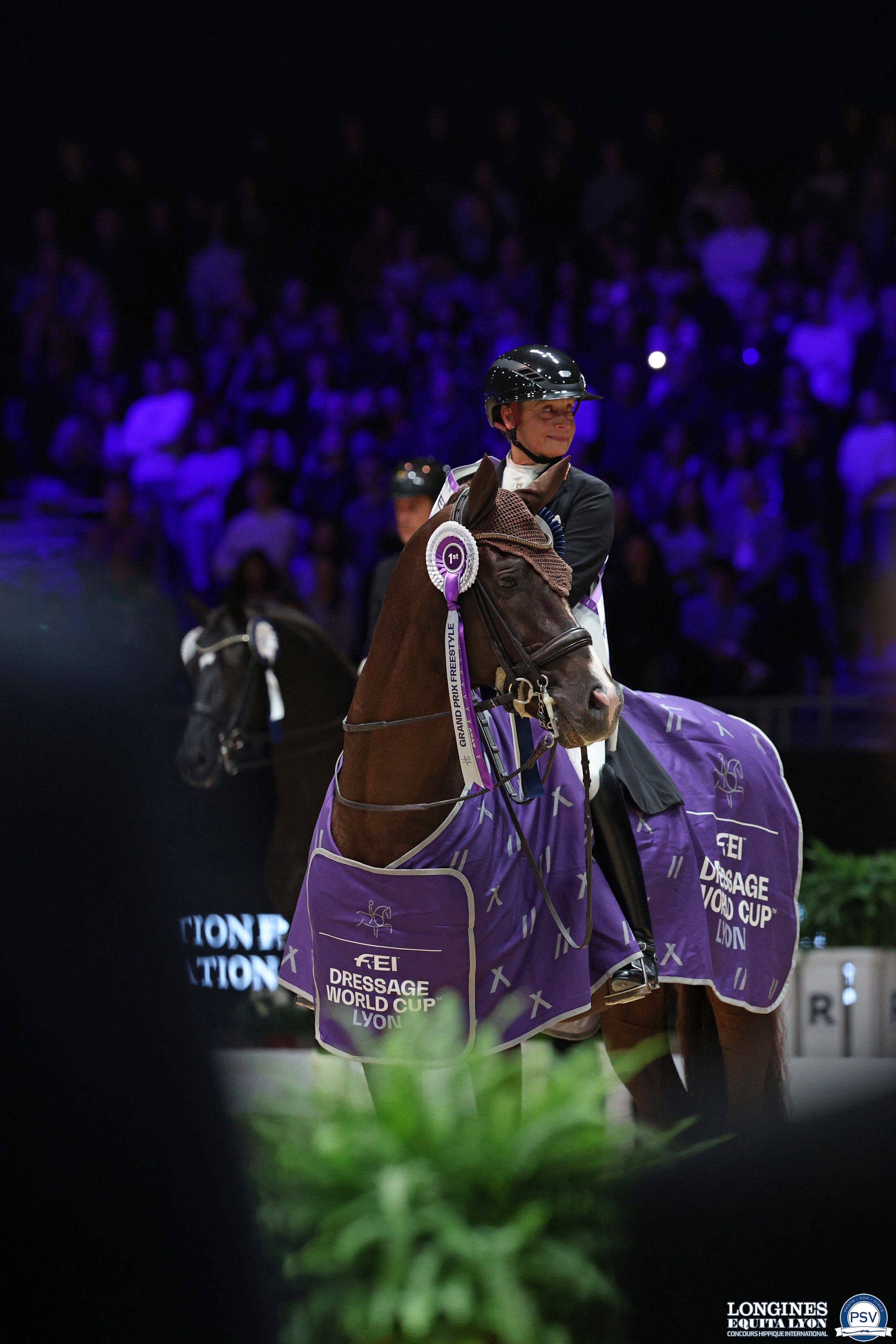
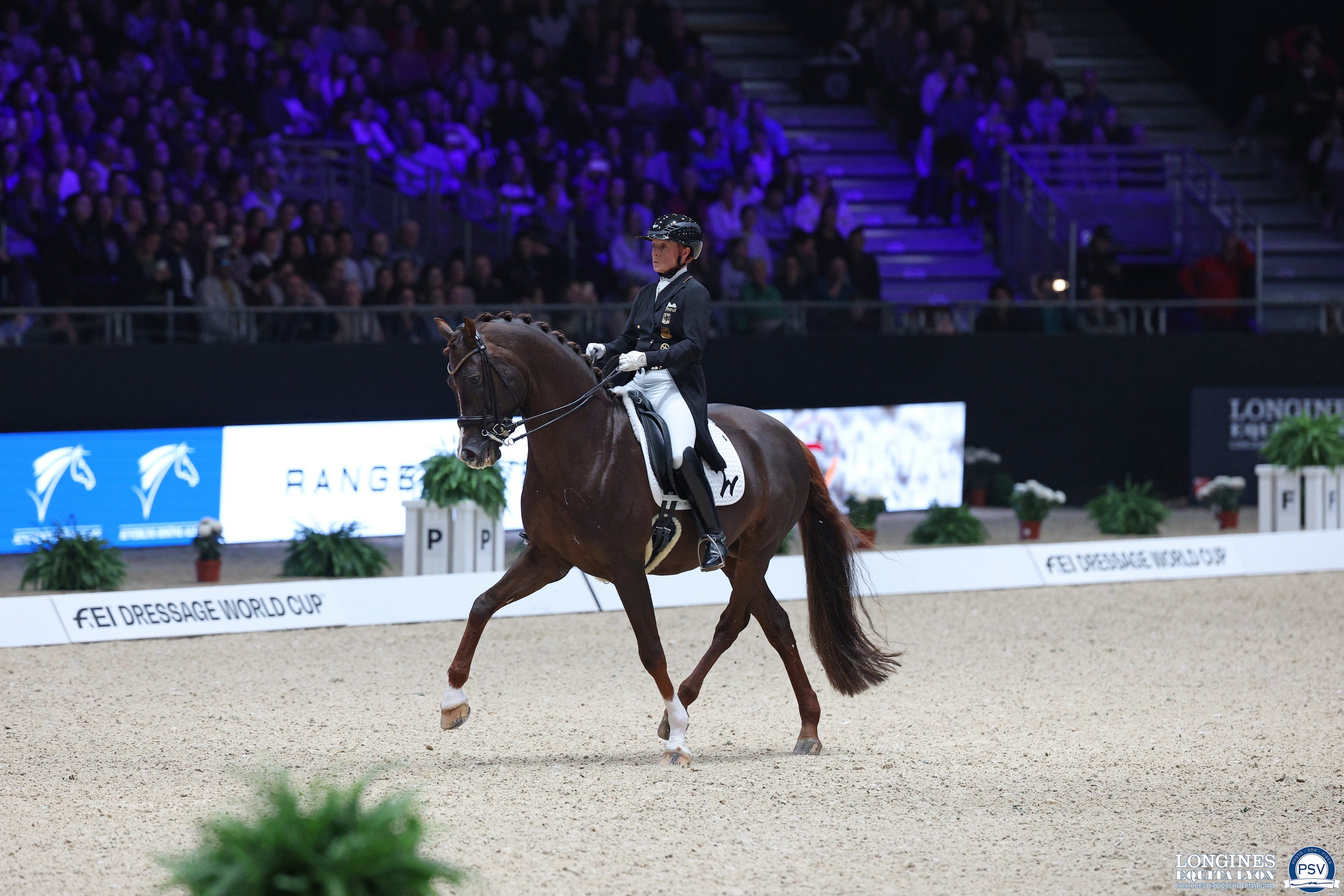
At Longines Equita Lyon, Concours Hippique International, Viva Gold faced particularly stiff competition. On Thursday, October 29, Justin Verboomen and Zonik Plus won the Grand Prix with an average of around 79%, ahead of Isabell Werth and Viva Gold on 77.587%. That runner-up finish behind the reigning European champions confirmed that the German stallion was now firmly among the podium contenders, even if he still faced a rival partnership celebrated for its seamless harmony. The very next day in the Grand Prix Freestyle, however, the tables turned. Performing a floorplan built around several Neil Diamond hits, including "Sweet Caroline" and "Song Sung Blue," Isabell Werth presented a remarkably expressive Viva Gold. The test showcased the stallion's natural gifts to perfection: an elastic trot, highly active passage, energetic piaffe reflecting his natural capacity for collection, and tight pirouettes. The fluency of the transitions and the degree of difficulty allowed the pair to surpass their previous personal best. The judges awarded them 87.890%, ahead of Justin Verboomen and Zonik Plus on 85.810%. In Lyon, Viva Gold proved he could not only execute a technically demanding test, but also maintain his focus and energy inside the electric atmosphere of a major indoor arena. There was no stopping the prodigy: two weeks later, Stuttgart would see Viva Gold reach yet another milestone.
Stuttgart: two new personal bests and a resounding confirmation
From November 13 to 14, 2026, the Stuttgart German Masters hosted the third leg of the FEI Dressage World Cup™. Isabell Werth and Viva Gold arrived riding an impressive streak of results, along with a new status. Having won in Lyon, they were no longer merely challengers—they had become the pair to beat. On Friday, November 13, they won the Grand Prix with 77.826%, a new personal record in the test. The following day, in the Grand Prix Freestyle, Viva Gold raised the bar once more. Before a crowd of some 8,000 spectators, the stallion again danced to Neil Diamond’s classics. The atmosphere was electric. The audience clapped along to the closing bars of "Sweet Caroline" and gave the German pair a standing ovation. Isabell Werth scored 88.560%—0.670 percentage points higher than in Lyon. Artistic marks ranged from 92.8% to 97.6% for an average of 95.12%, with two judges awarding artistic scores of 96.6% and 97.6%. The performance set a new personal record for the combination and, above all, secured their second consecutive FEI Dressage World Cup™ leg victory!
Gothenburg 2027: a stated goal
With forty points earned across two legs, Isabell Werth now sits in provisional third place in the FEI Dressage World Cup™ Western European League—a prime position heading toward the Final, set for March 24–28, 2027, in Gothenburg. In Stuttgart, the German rider confirmed her intention to contest the Final with Viva Gold, while emphasizing the importance of carefully managing her rising star. At ten years old, Viva Gold could nevertheless make his World Cup Final debut in Sweden just one year after his international Grand Prix breakthrough.